
Bathroom Remodeling in Las Vegas — Layout Changes, Tile, and Fixture Upgrades
Every remodel starts with the waterproofing membrane — then layout, then tile — built and tiled in-house under Nevada Tiling License #0092652.
Las Vegas Bathroom Remodels Start With Waterproofing, Not Tile
A Las Vegas bathroom remodel that skips proper waterproofing fails within two to three years.
The tile you choose matters. The layout you choose matters. But neither holds up without a correctly installed wet-area membrane — a waterproof system applied beneath tile on shower walls and floors — underneath.
Las Vegas has some of the hardest water in the country. The Southern Nevada Water Authority delivers Lake Mead water carrying high concentrations of dissolved calcium and magnesium that deposit on grout lines, around fixture connections, and inside shower-pan drains. In bathrooms without proper waterproofing, those deposits work into developing cracks — grout lifts, tile edges separate, the shower fails.
This is the most common reason Las Vegas homeowners remodel a bathroom twice in ten years. The first remodel chose tile before addressing the membrane. We start with the membrane.
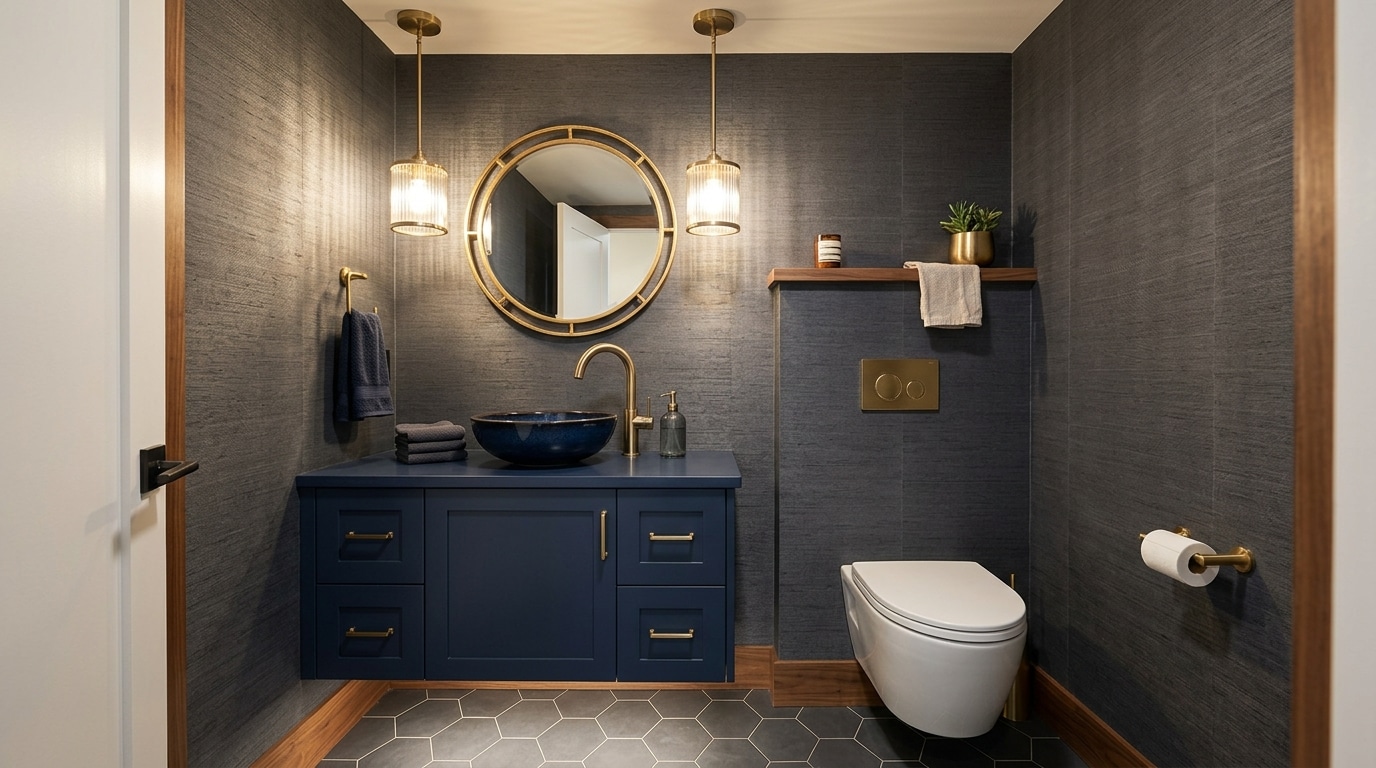
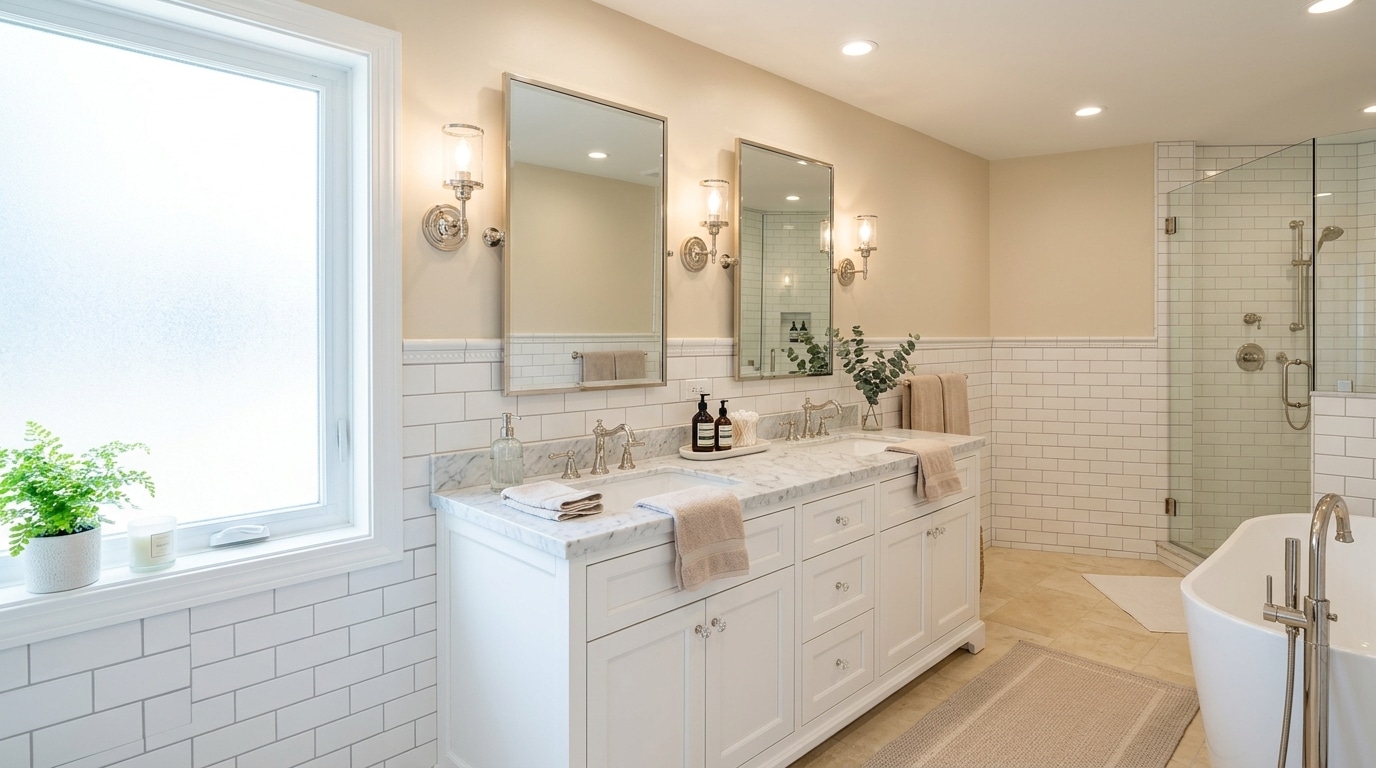
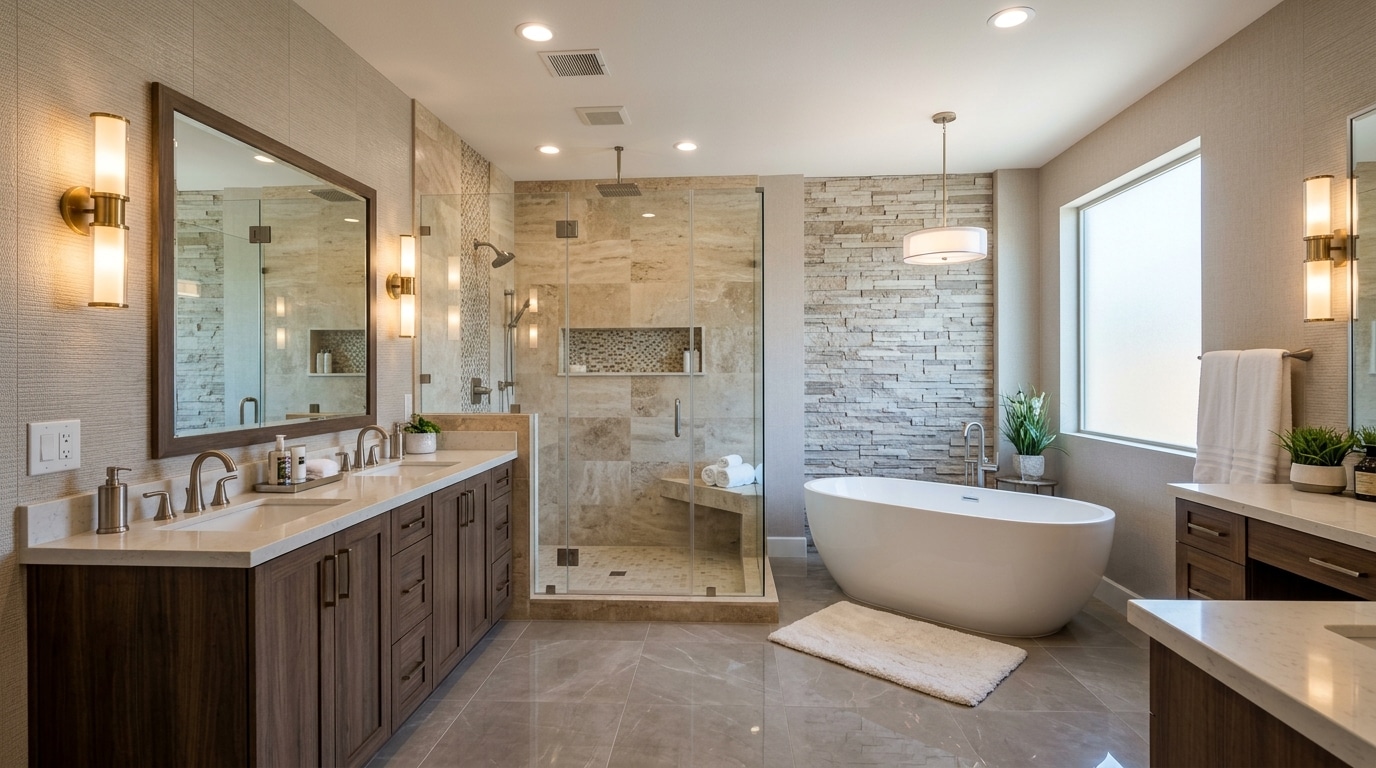
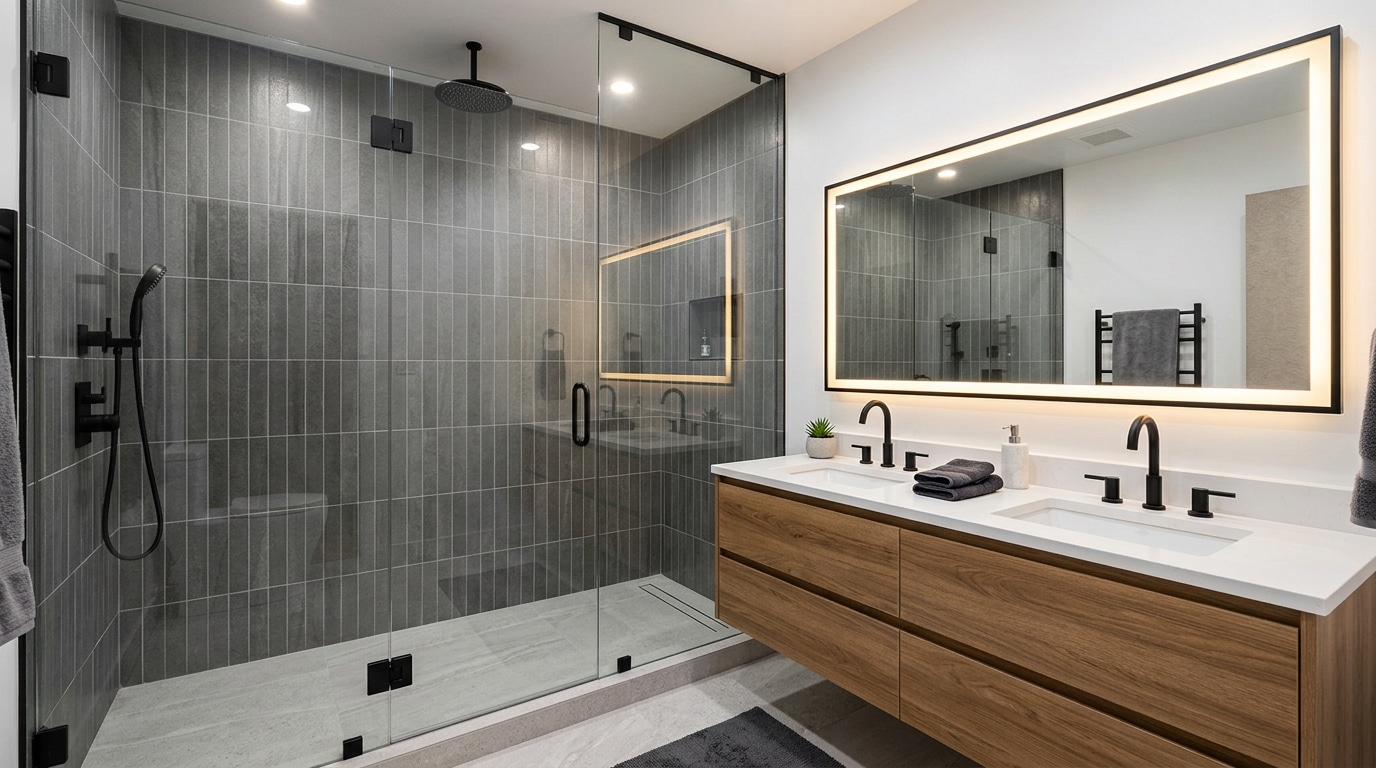
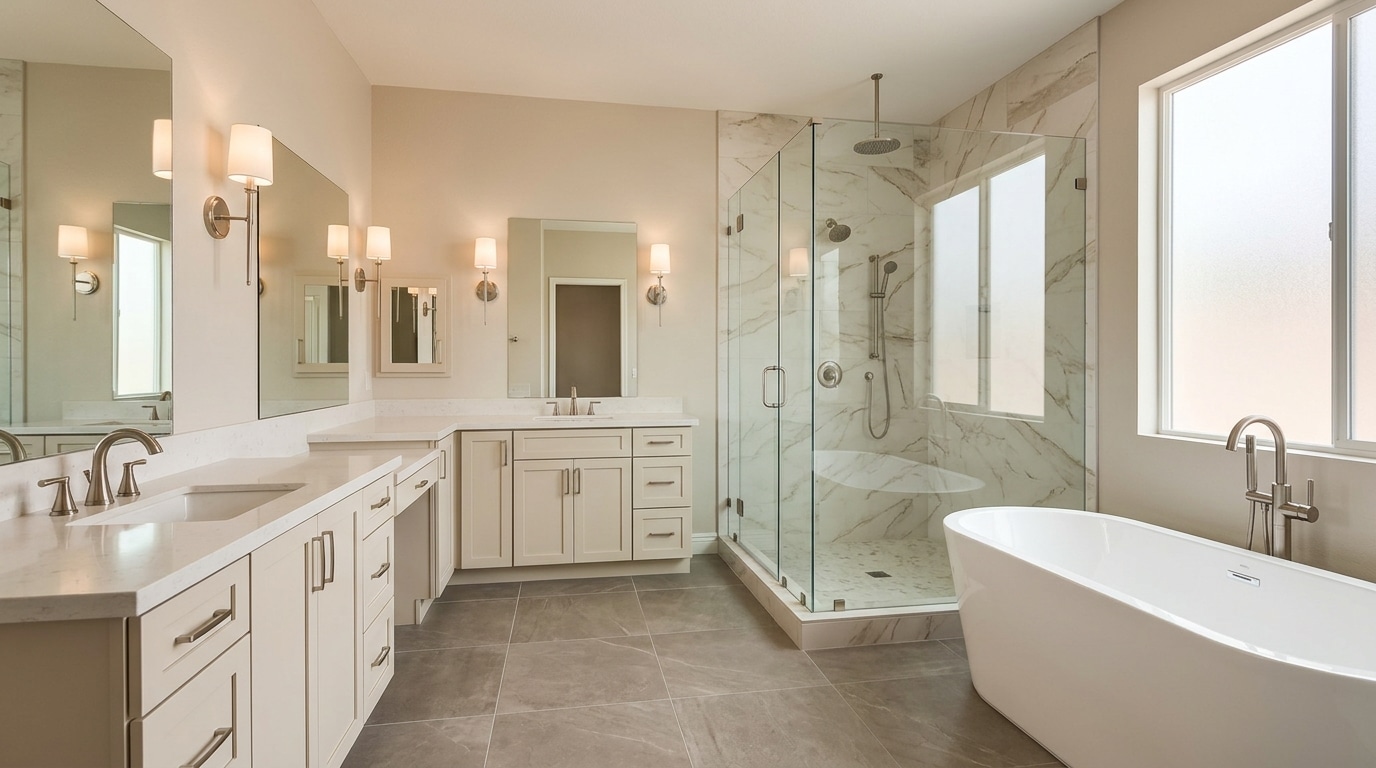
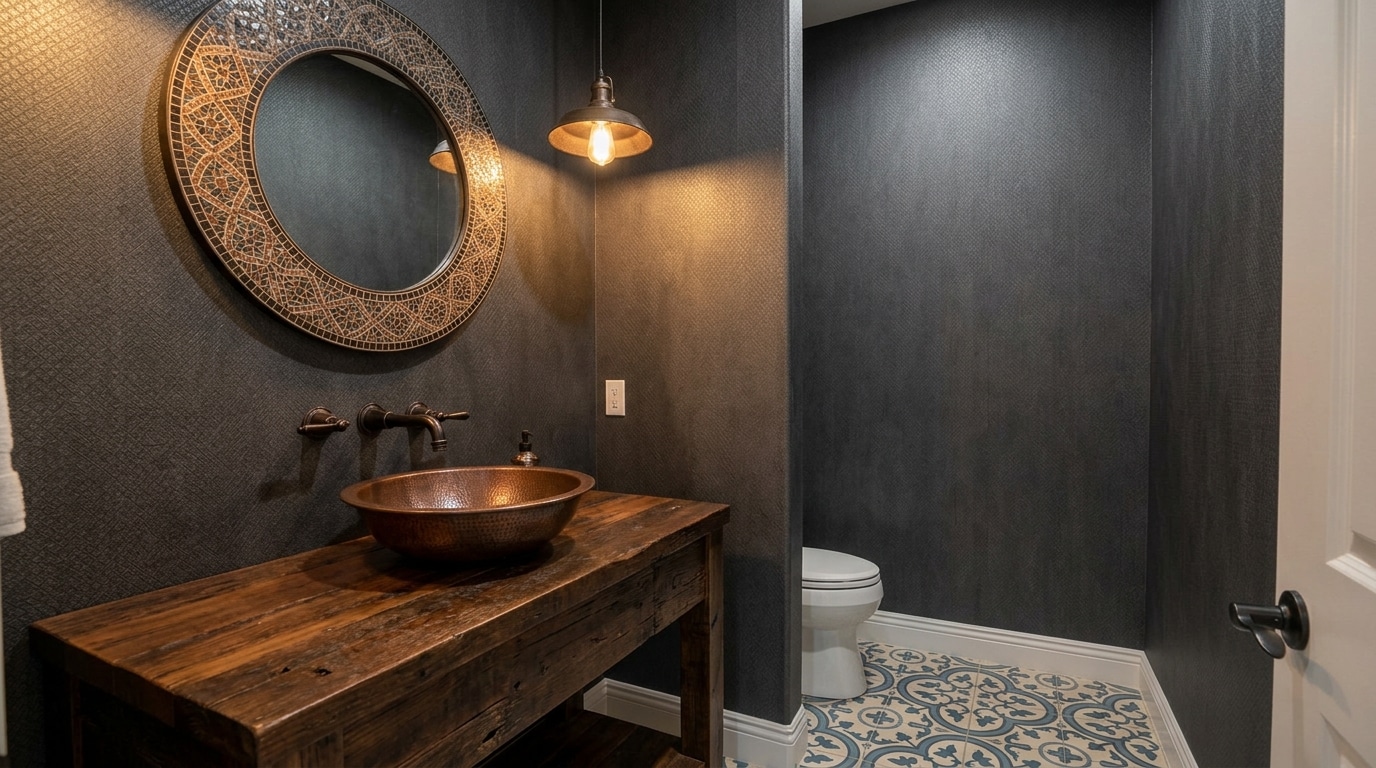
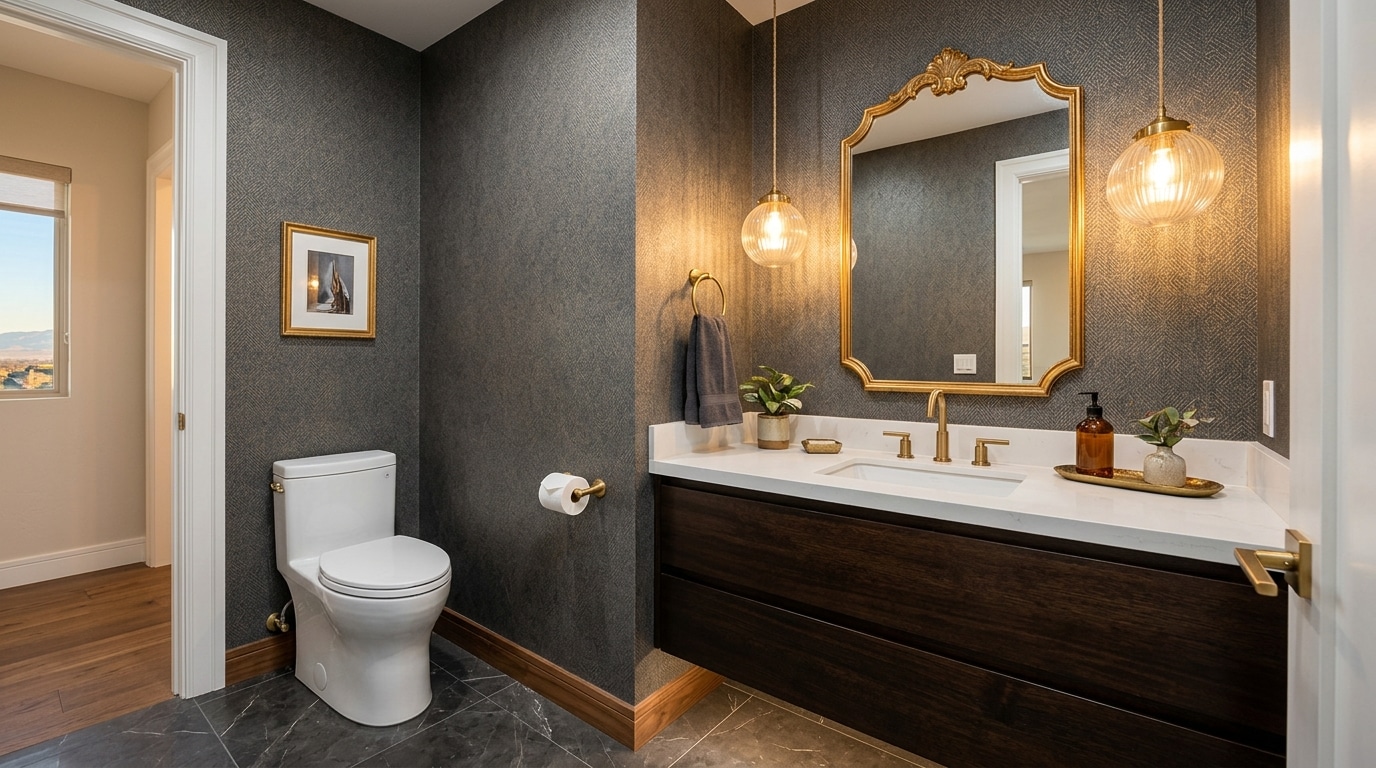
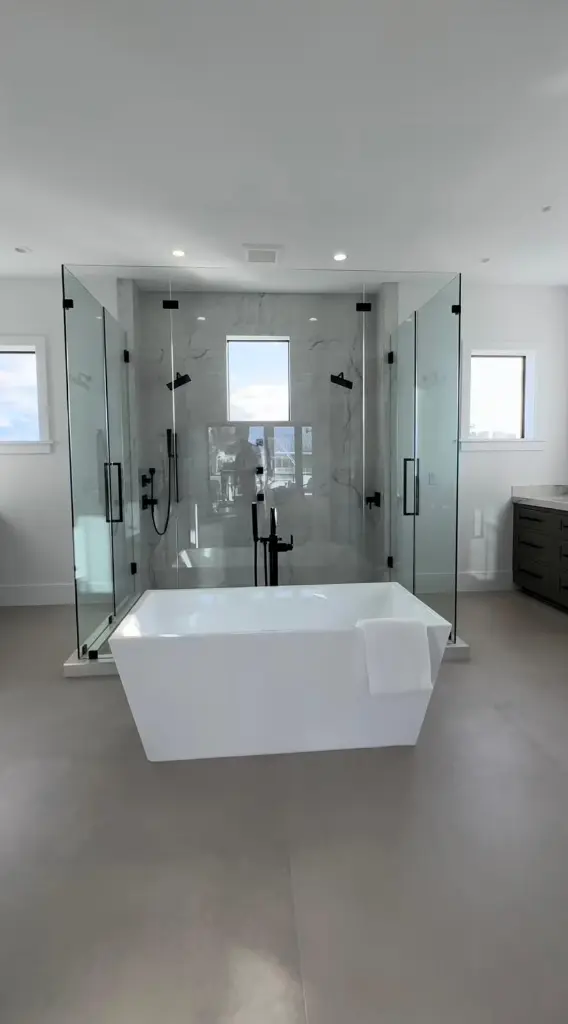
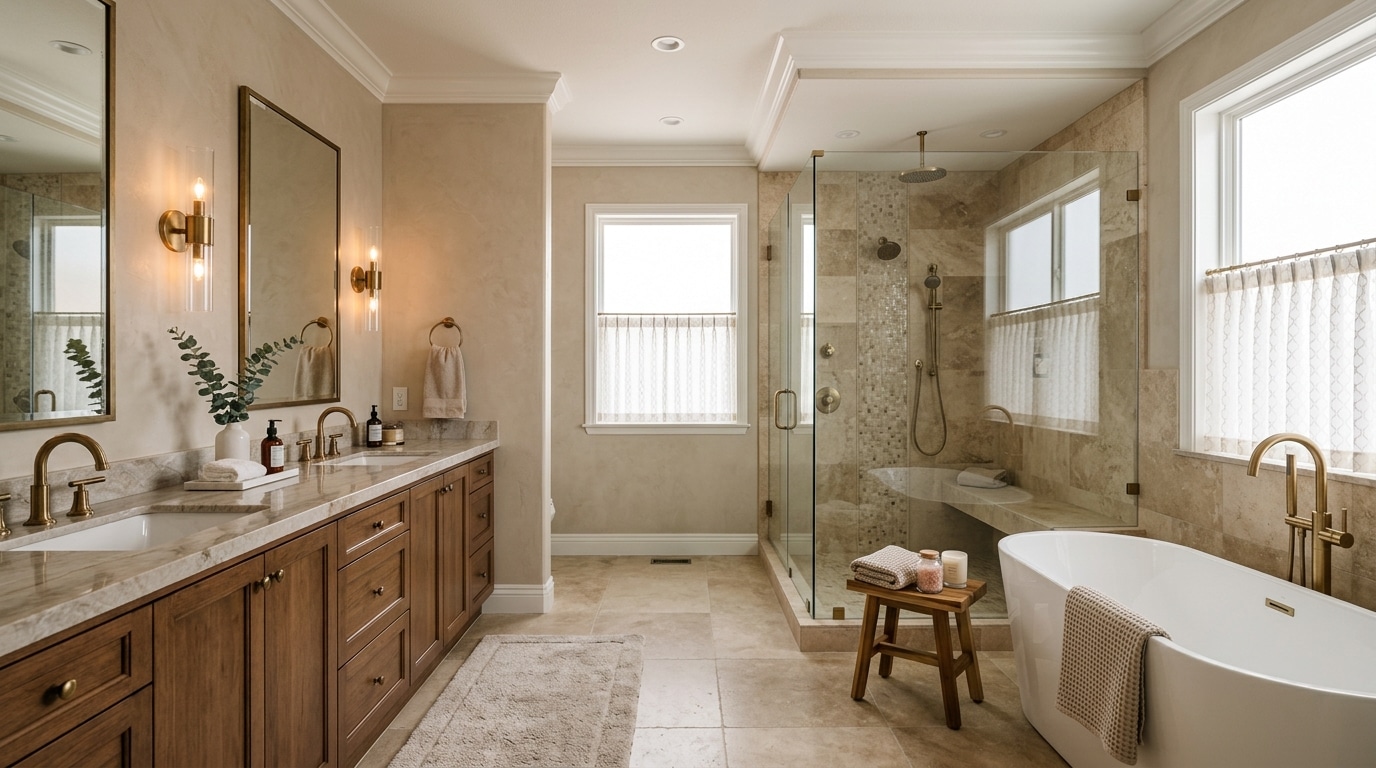
Hard Water Is the Enemy of Cheap Grout
Clark County water consistently exceeds 300 parts per million in dissolved minerals. That mineral load is exactly what separates grout that lasts twenty years from grout that lifts in three — which is why we specify the membrane, adhesive, and grout as one system built for the Las Vegas water profile.
How Hard Water Changes the Right Waterproofing Choice in Nevada
Las Vegas water hardness determines which waterproofing system will actually last — it is not a minor variable.
Standard sheet membranes perform adequately in markets with moderate mineral content. In Clark County, where mineral levels consistently exceed 300 parts per million, the membrane needs to be continuous and fully bonded to the substrate before any tile is set.
The waterproofing layer and the tile selection have to work as a system. The membrane type affects which tile adhesives bond correctly; the tile format affects how the membrane handles expansion across the substrate. Choosing tile first risks material incompatibility — and splits accountability between whoever installed the membrane and whoever set the tile.
Homes built in the 1990s and early 2000s — neighborhoods like Green Valley (89014) and the Silverado Ranch corridor (89183) — are the most common source of failing-tile calls. Those original bathrooms were built to standards that didn’t account for what Las Vegas water does to grout over 20 years.
The Decision Layers We Walk Through Before a Bathroom Scope Is Written
Waterproofing first. Layout second. Tile and fixtures third. Each layer constrains the next one.
My name is Isaac Itzhaki. I founded 1 Home Construction in Las Vegas in 2004. Before finishes are discussed, every bathroom moves through three decision layers, and each one constrains the next.
Waterproofing comes first because it determines how the substrate is prepared. If an existing shower pan — the waterproof base of a tile shower — has a failing liner, that has to be confirmed before tile is discussed. In Clark County, a custom mortar-bed shower pan requires inspection before any tile goes in.
Layout comes second because moving plumbing triggers a separate Clark County plumbing permit whenever a drain, supply line, or vent stack is relocated — and a rough-in inspection before walls close. Tile and fixtures come last: once the waterproofing system and plumbing scope are defined, the tile installation has a clear set of constraints. That’s the right order.
Choosing tile before the membrane is exactly how a bathroom ends up remodeled twice in ten years. The membrane type affects which adhesives bond; the tile format affects how the membrane handles substrate expansion. Designed together, they last. Split between two contractors, accountability disappears at the first crack.
Founder, 1 Home Construction LLC
Turn a Tub-and-Shower Combo Into a Walk-In Shower
Converting a tub-and-shower combo to a walk-in shower is one of the most common layout changes we do in Las Vegas homes built in the 1990s. It means relocating the drain, modifying the supply rough-in, and building a new shower pan to the correct slope and liner spec — permit, rough-in, waterproofing, and tile, all under one licensed crew.
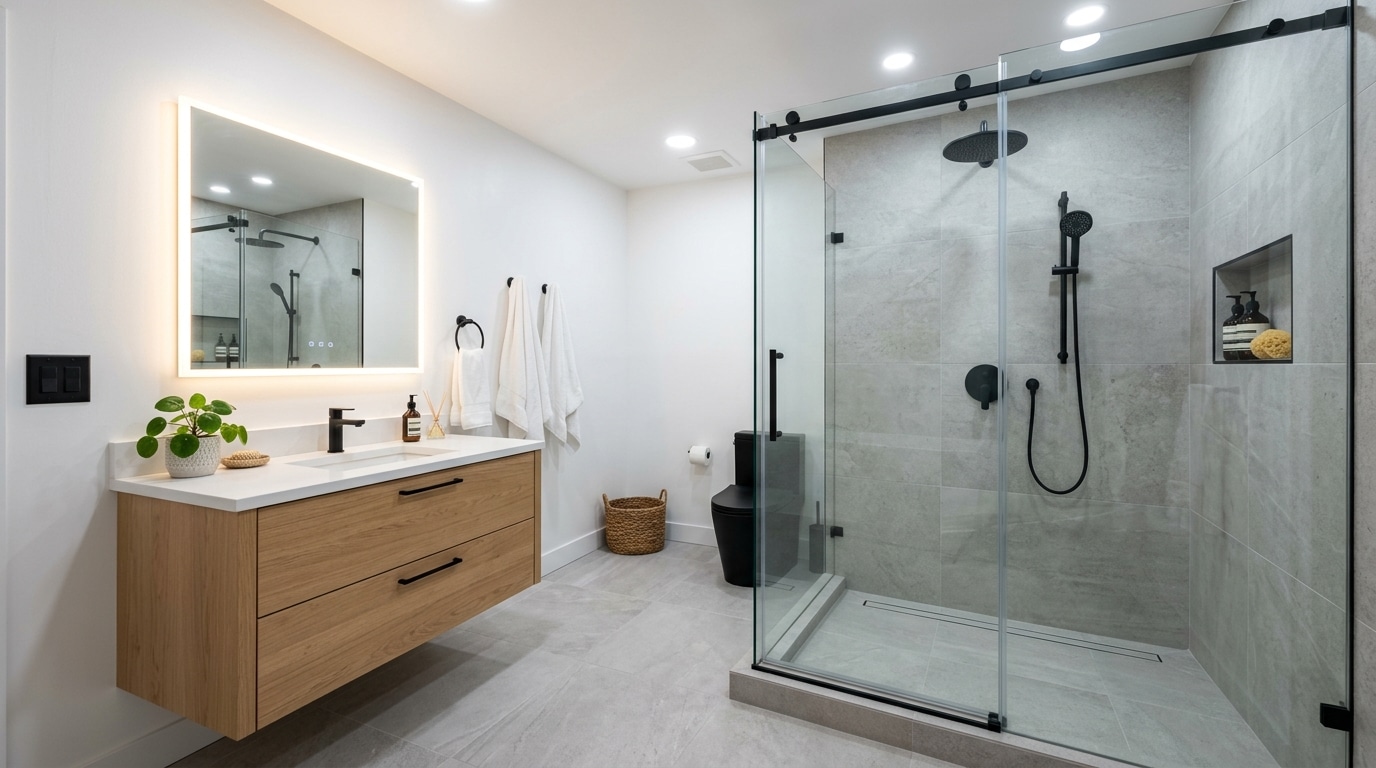
Tile License #0092652 Means Waterproofing and Tile Are Designed Together
Nevada Tiling License #0092652 is a specialty license issued specifically for tile installation — separate from a general construction license. We hold it.
When waterproofing and tile are split between two contractors, accountability disappears at the point of failure. On every bathroom we complete, the crew that installs the wet-area waterproofing is the same crew that sets the tile on top of it. One license. One crew. One point of responsibility — which, in Las Vegas, is the difference between a bathroom that holds up and one that needs to be redone.
Beyond the tiling license, 1 Home Construction holds these Nevada State Contractors Board licenses — so flooring transitions into adjacent rooms and paint work after tile stay in-house under the same crew:
- Tiling License #0092652
- General Construction License #0090486
- Flooring License #0092653
- Painting License #0092654
How We Sequence Waterproofing, Layout, and Finishes on Every Bathroom
Waterproofing decisions before layout decisions, layout decisions before finish selections — the same sequence on every project.
Standards on Every Bathroom Project
- Wet-area membrane installed and inspected before any tile is set
- Custom mortar-bed shower pans scheduled for Clark County inspection before tile begins
- Plumbing rough-in inspected before walls are closed on any relocated drain, supply, or vent
- Tile adhesive and grout specified after the membrane type is set, not before
- Fixture rough-in confirmed against the approved final layout before walls close
- All tile work performed under Nevada Tiling License #0092652 — never unlicensed
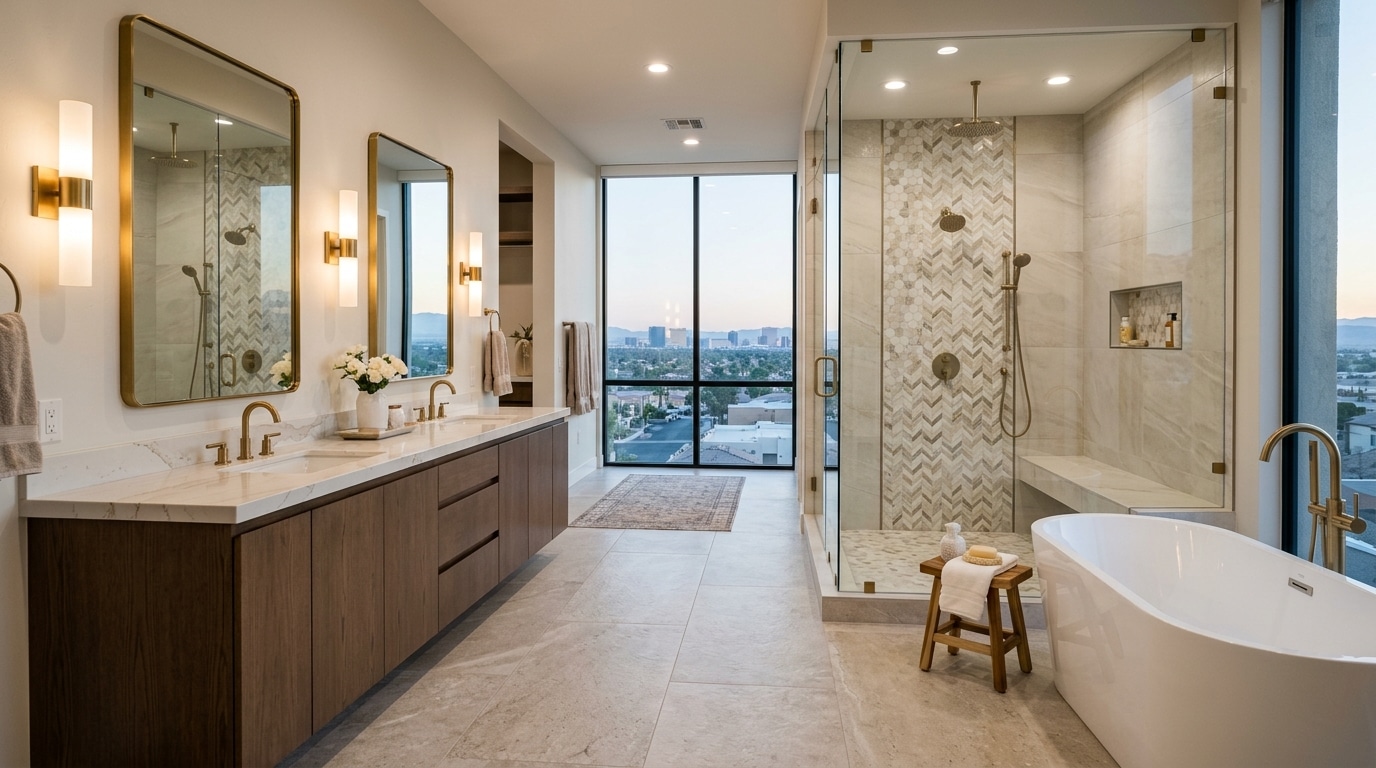
Tile and Grout Chosen for the Las Vegas Profile
Adhesive and grout aren’t picked from a showroom board — they’re specified against Clark County’s 300-plus-ppm water profile so they hold up under the mineral exposure that deposits on grout lines and works into microscopic cracks over time.
Permit, Demo, Rough-In, Inspection, Tile — The Las Vegas Order
A permitted bathroom remodel in Clark County moves through a defined inspection sequence, and the project follows it.
Diagnostics
Before any scope is written we assess four conditions: current shower-pan condition, plumbing configuration relative to the proposed layout, electrical panel capacity for new fixture circuits, and substrate condition under existing tile. In 1990s Las Vegas bathrooms the original waterproofing often didn’t extend behind the tile wainscoting — a failure point that has to be addressed before new tile goes in.
Implementation
Once the permit is issued, demolition removes finishes to the substrate. Plumbing is relocated if the layout requires it, then wet-area waterproofing is installed on shower walls and floor before any tile work begins; for a custom pan, the mortar bed is built and the liner is set. The Clark County rough-in inspection is scheduled before walls close. After clearance, backer board goes up, tile begins at the shower floor and works up, and grout follows once the adhesive has cured — fixtures connect last.
Post-Service Testing
Before close-out, each fixture runs a full water cycle — shower temperature control, drain flow rate, and connection points checked at operating pressure. Any grout line or tile edge that shows movement after the water test is addressed before we schedule the final inspection with Clark County.
Bathroom Remodeling Across Las Vegas, Henderson, and the Southwest Valley
1 Home Construction completes bathroom remodels throughout Clark County, Nevada.
We work across Las Vegas, Henderson, Summerlin, North Las Vegas, and the surrounding southwest valley — active areas include the Southwest Las Vegas corridor (89139, 89113), Henderson (89014, 89183), and Summerlin (89134, 89135). For kitchen remodeling and interior remodeling projects we serve the same area under the same licensed crew.
Tell Us Your Layout Goals — We'll Start With the Waterproofing Plan
Whether it’s a layout change, a tile replacement, or a full fixture upgrade, the first conversation is about waterproofing — not finishes. We’ll walk through your existing bathroom and tell you exactly what the project involves before any scope is written.
Email of****@***************on.com · 5875 S Rainbow Blvd #204, Las Vegas, NV 89118 · Tile License #0092652
Bathroom Remodel Questions From Las Vegas Homeowners
Not every scope triggers a permit, but most remodels do. Any work that moves a drain, supply line, or vent stack requires a plumbing permit, and a custom shower pan requires a rough-in inspection before tile is set. If the scope only covers tile replacement on existing surfaces without relocating plumbing, a permit may not be required — but we confirm that against the specific scope before any work begins.
Clark County water regularly exceeds 300 parts per million in dissolved minerals. That mineral load deposits on grout lines and works into microscopic cracks over time, and certain grout formulations and sealers hold up under that exposure better than others. We specify grout and sealer based on the Las Vegas water profile, not on what looks good in a showroom.
A failed liner means the substrate under your existing tile has likely been exposed to moisture. Before any new tile goes in, the mortar bed has to be evaluated and, in most cases, removed and rebuilt. In Clark County a new custom mortar-bed shower pan requires a rough-in inspection before tile begins. We assess liner condition during our pre-scope diagnostic — before any budget is written.
Yes. That conversion is one of the most common layout changes we do in Las Vegas homes built in the 1990s. It requires relocating the drain, modifying the supply rough-in, and building a new shower pan to the correct slope and liner spec. Clark County requires a plumbing rough-in inspection before walls are closed, and we handle the permit, the rough-in, the waterproofing, and the tile under one licensed crew.
A single bathroom remodel with a layout change and full tile replacement typically runs three to five weeks from permit issuance to final inspection, depending on inspection scheduling and material lead times. Scope that requires a custom shower pan adds time for the mortar bed to cure before tile can begin. We give a project-specific schedule after the pre-scope diagnostic.