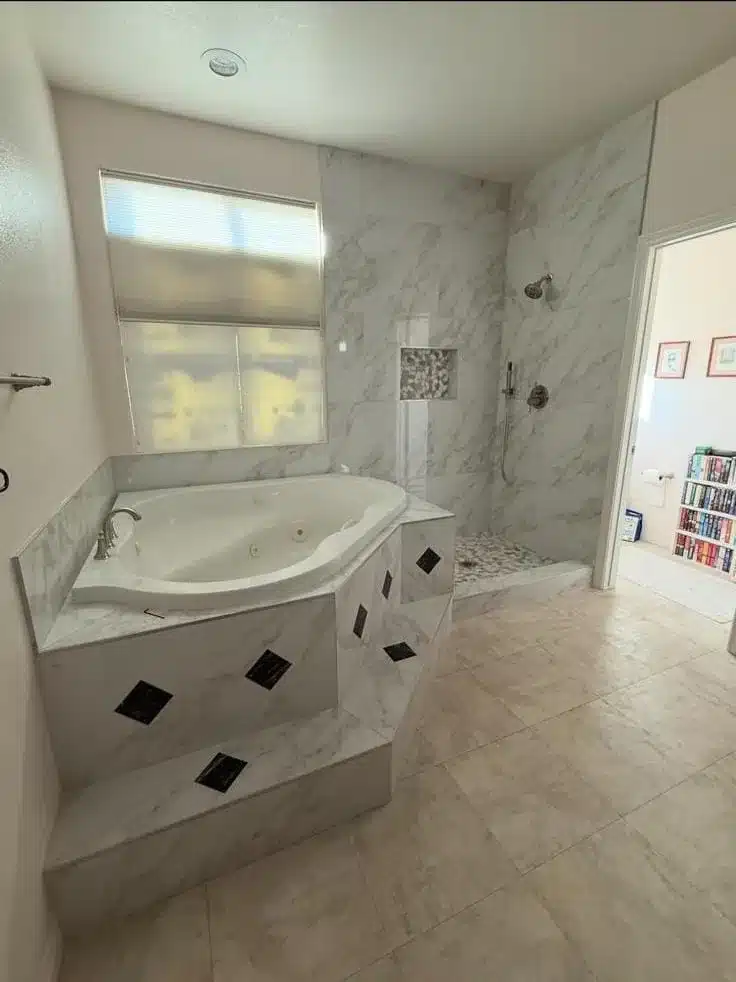
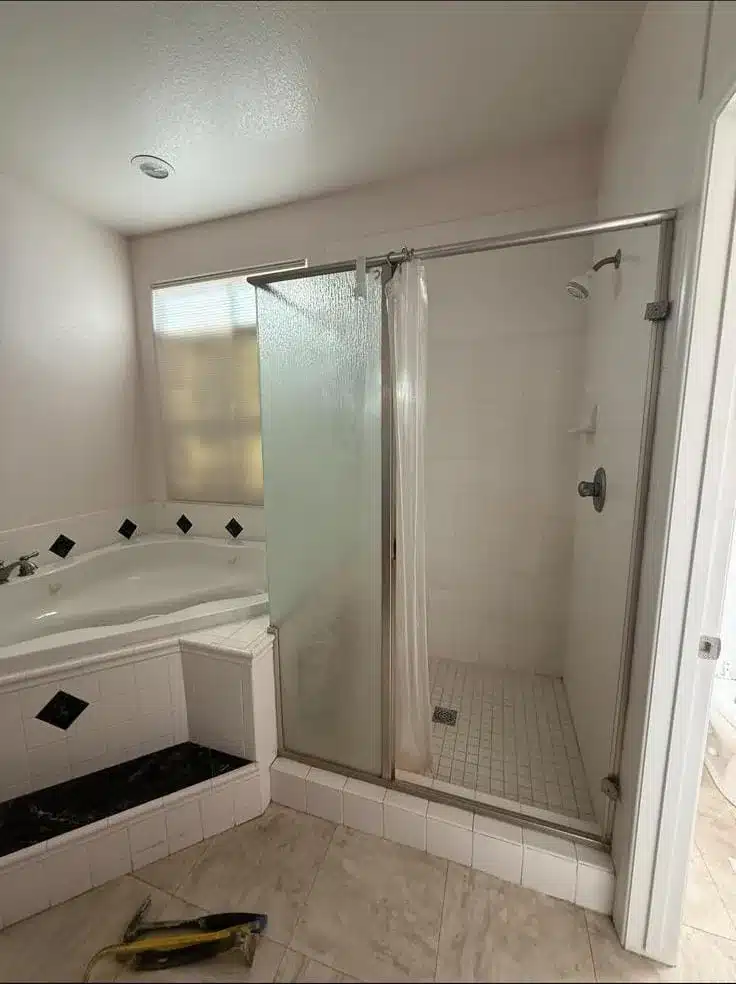
When you can replace shower tile without a full remodel
Keeping the bathtub or shower layout can limit the work to the wet area. The condition beneath the tile still affects how much must come out.
Keeping the vanity and bathroom floor does not establish whether the shower’s underlying assembly can remain.
Our bathroom remodeling services include work involving showers and surrounding finishes. Tell us which fixtures you want to keep so the proposed scope can address those limits.
What a wet-area tile estimate should include
A wet-area estimate should describe the work behind the tile as clearly as the visible finish. Our contact page explains that most substantial projects need a site visit before a detailed estimate.
The written scope should identify these items:
Our tile installation cost guide provides broader planning context. Pricing for your surround still depends on its existing assembly and the work included.
- Demolition limits, including which surfaces and fixtures remain.
- Surface preparation and the waterproofing system included.
- Tile specifications, grout, trim, and other finish details.
- Plumbing changes and responsibility for necessary permits.
- Material purchasing and delivery responsibilities.
- Exclusions and handling of conditions uncovered during demolition.
- Written change-order handling, including price and scope changes.
Who decides whether tile work needs a permit
The building authority for your parcel decides permit requirements based on the actual work. Cosmetic tile replacement should not automatically be treated as permit-required or permit-exempt.
A Las Vegas mailing address can correspond to city or unincorporated county jurisdiction. Incorporated municipalities have their own permitting authorities; unincorporated communities do not have independent municipal building departments.
Check local requirements with the parcel’s building authority before work begins. Plumbing, electrical, gas, structural, and permit-related work needs appropriate professional review and any required licensed trades.
Under Nevada residential improvement law, contractors are responsible for necessary permits on covered owner-occupied single-family improvement contracts. The proposal should identify that responsibility before you approve the work.
How local hard water affects tile maintenance
Calcium and magnesium contribute to local water hardness, according to the Las Vegas Valley Water District. The district describes mineral deposits and residue on fixtures.
That makes cleaning access, grout appearance, and maintenance expectations useful topics when selecting a surround finish. A recessed niche or tub ledge also belongs in the maintenance discussion because it adds surfaces to clean.
Tile selection and the condition of the underlying wet-area assembly need separate attention.
How to compare tile contractors and proposals
Nevada recognizes C-20 as a tile classification. Check the business entity, classification, monetary limit, restrictions, and current status through the Nevada State Contractors Board.
A published license number needs to be matched to the work being contracted.
Compare proposals using the same retained fixtures and demolition boundaries. A lower total may cover fewer preparation steps or leave the shower pan unresolved.
For pre-1978 homes, covered paid renovation falls under EPA lead-safe renovation requirements. Applicable firm and renovator certification and lead-safe practices must be addressed before covered work starts.
Applicable silica-generating work needs exposure controls, a written control plan, and other protections under construction silica requirements.